 1-888-482-2880
 Proudly Canadian
Understand Boiler Costs
Compare System Type, Home Size And Installation Requirements In Ontario.
Compare Boiler Costs, Combi And System Boilers, Sizing, Efficiency And Installation Choices For Ontario Homes.
Explore The Guide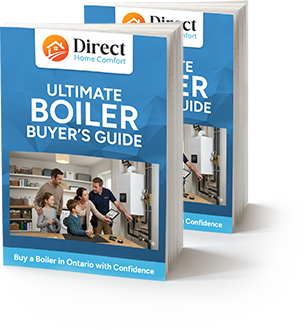 Compare Boiler Types, Costs And Installation.
Sized For Your Home And Built For Ontario Winters.
Compare Boiler Types, Costs And Installation.
Sized For Your Home And Built For Ontario Winters.
Understand Boiler Types, Heat-Loss Sizing, Efficiency And Your Total Cost.
Compare System Type, Home Size And Installation Requirements In Ontario.
Explore Combi, System And Heat-Only Boilers For Your Home.
A Full Heat-Loss Calculation Matters More Than Square Footage Alone.
Explore Cost, AFUE Efficiency, Sizing, Boiler Types And When Replacement Makes Sense.

Compare Boiler System And Installation Costs Alongside Operating Costs.
 AFUE
AFUE
Compare AFUE Ratings And Heating Energy Use.
 SIZING
Learn Why A Professional Heat-Loss Calculation Matters.
 TYPES
TYPES
Compare Combi, System And Heat-Only Boilers.
 REPAIR
Compare Boiler Age, Repair Costs And Long-Term Value.
Premium Equipment From Trusted Manufacturers.



Use The Guide To Compare Boiler Performance, Total Cost And Installation Requirements.
Compare Combi, System And Heat-Only Boilers For Your Home.

Match Boiler Output To Your Home’s Heat Loss And Layout.

Compare AFUE Ratings And Energy Use In Ontario Winters.
Compare Installation, Maintenance And Operating Costs.
Know What To Expect From Boiler Installation And Setup.
Choosing a boiler is easier when you understand the real decisions behind it — sizing, system type, installation quality, operating cost, and long-term reliability. Explore these boiler-specific resources to help you make a smarter decision.
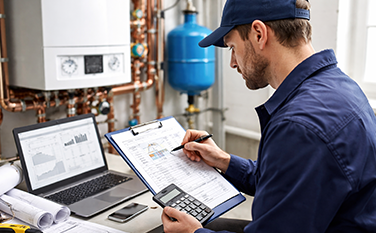 BOILER SIZING
What Boiler Size Does Your Home Actually Need?
BOILER SIZING
What Boiler Size Does Your Home Actually Need?
Boiler sizing is one of the most important parts of the buying process. Learn how heat loss, home layout, and hot water demand affect the size and output your system actually needs.
Read Guide ›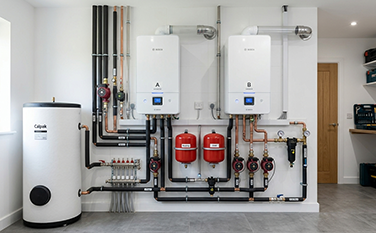 SYSTEM CHOICE
Combi Boiler Vs System Boiler: Which Makes More Sense?
SYSTEM CHOICE
Combi Boiler Vs System Boiler: Which Makes More Sense?
Not every home should have the same type of boiler. Compare combi and system boilers based on hot water demand, home size, available space, and long-term performance.
Read Guide ›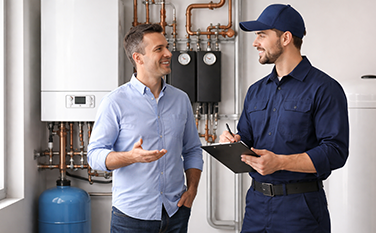 OWNERSHIP OPTIONS
Boiler Rental Vs Buying: Which Option Fits Your Home?
OWNERSHIP OPTIONS
Boiler Rental Vs Buying: Which Option Fits Your Home?
Some homeowners want ownership, while others prefer predictable monthly costs and service coverage. Understand the pros, trade-offs, and long-term value of both boiler rental and buying.
Read Guide ›
Explore Boiler Purchase, Rental And Payment Plans With Service And Protection Options Available.
Straight Answers To The Questions Ontario Homeowners Ask Most.
Combi boilers provide heating and on-demand hot water. System boilers work with a separate hot water storage tank. Heat-only boilers suit many traditional radiator systems.
Boiler sizing is based on a full heat-loss calculation, not square footage alone. Insulation, windows, home layout, ceiling height and outside weather all matter.
The guide lists a typical Ontario installation range of $5,500 to $12,000+, depending on system type, home size and installation complexity. A quote should reflect your actual home and scope.
AFUE measures how efficiently a boiler converts fuel into heat. The guide compares mid-efficiency and high-efficiency systems, while noting that proper design and installation also matter.
Consider the boiler’s age, frequency of breakdowns, rising energy bills, uneven heating, leaks and visible corrosion. A qualified assessment can help compare repair and replacement.
The guide discusses purchase, financing, payment plans and rental. Compare upfront investment, predictable monthly payments, coverage and long-term ownership cost.
Tell Us About Your Home And We’ll Help You Compare Boiler Systems, Installation And Payment Options.



Ontario’s
Heating
Experts

Licensed
HVAC
Professionals

Up-to-Date
Boiler
Pricing
Boilers heat water and move heat through radiators, baseboards, or in-floor heating systems. They provide steady, even warmth for reliable indoor comfort during Ontario winters. Modern high-efficiency boilers can also help reduce energy consumption and heating costs.
Buying a new boiler is a critical decision that impacts your home’s comfort, energy efficiency, and long-term operating costs. This guide explains how to choose the right high-efficiency boiler system, understand real installation costs in Ontario, compare combi boilers vs traditional systems, and avoid costly mistakes.
The average cost of a new boiler installation in Ontario typically ranges between $5,500 and $12,000+, depending on system type, home size, and installation complexity.
Factors that influence cost include:
Choosing the right boiler system directly impacts comfort and efficiency.
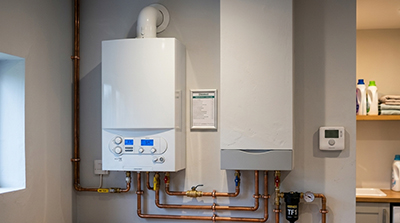
Provide both home heating and on-demand hot water from a single compact high efficiency unit, eliminating the need for a separate tank entirely. Ideal for smaller homes in Ontario with limited space, offering high efficiency, lower installation costs, and consistent reliable everyday comfort.
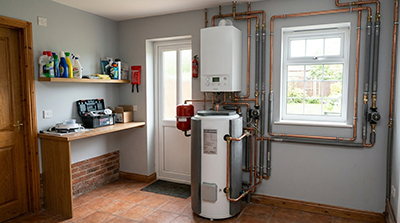
Designed for homes with higher hot water demand, system boilers work with a separate hot water storage tank to maintain strong and consistent water pressure. Ideal for medium to large homes, delivering reliable heating, improved efficiency, and consistent performance across multiple bathrooms.
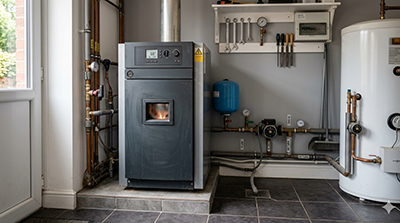
Best suited for older homes with radiator systems, heat-only boilers operate with a separate hot water tank to provide consistent, reliable heating output efficiently. A reliable option for traditional heating systems, offering steady performance, simple design, and long-term durability.
Boiler sizing is based on a full heat loss calculation, not square footage alone.
A proper calculation looks at:
Wrong sizing can cause:
Always have a licensed technician do a full heat loss calculation before installation.
AFUE (Annual Fuel Utilization Efficiency) measures how efficiently a boiler converts fuel into heat.
Higher efficiency systems reduce energy costs and provide more consistent heating.
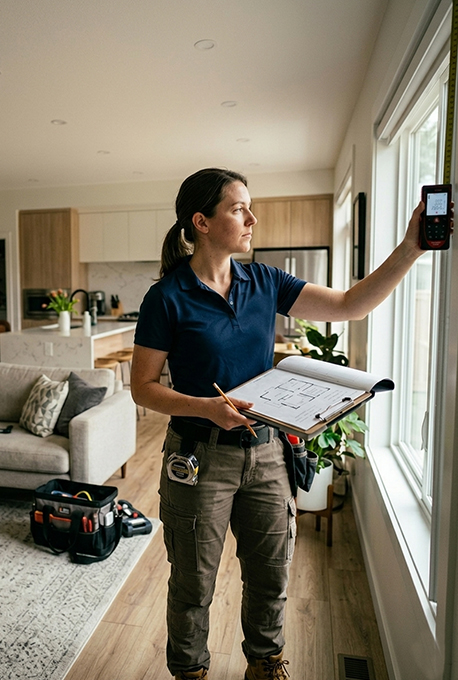
Homeowners in Ontario can choose to either buy or rent a boiler system.
For many homeowners, boiler rental provides convenience, protection, and peace of mind without large initial costs.
For many Ontario homeowners, renting a boiler is the easiest option. It removes large upfront costs and often includes service and repairs, so monthly costs are easier to manage.
| Feature | Rental | Purchase |
|---|---|---|
| Upfront Cost | Low | High |
| Monthly Cost | Fixed | None |
| Repairs | Included | Extra Cost |
| Maintenance | Included | Extra Cost |
| Long-Term Cost | Medium | Lower |
You may need to replace your boiler if:
Upgrading improves efficiency, reliability, and long-term cost savings.
Depending on your system and eligibility, you may qualify for:
These can significantly reduce the cost of upgrading to a high-efficiency boiler.
Installation quality directly impacts system performance and lifespan.
Choose a company that offers:
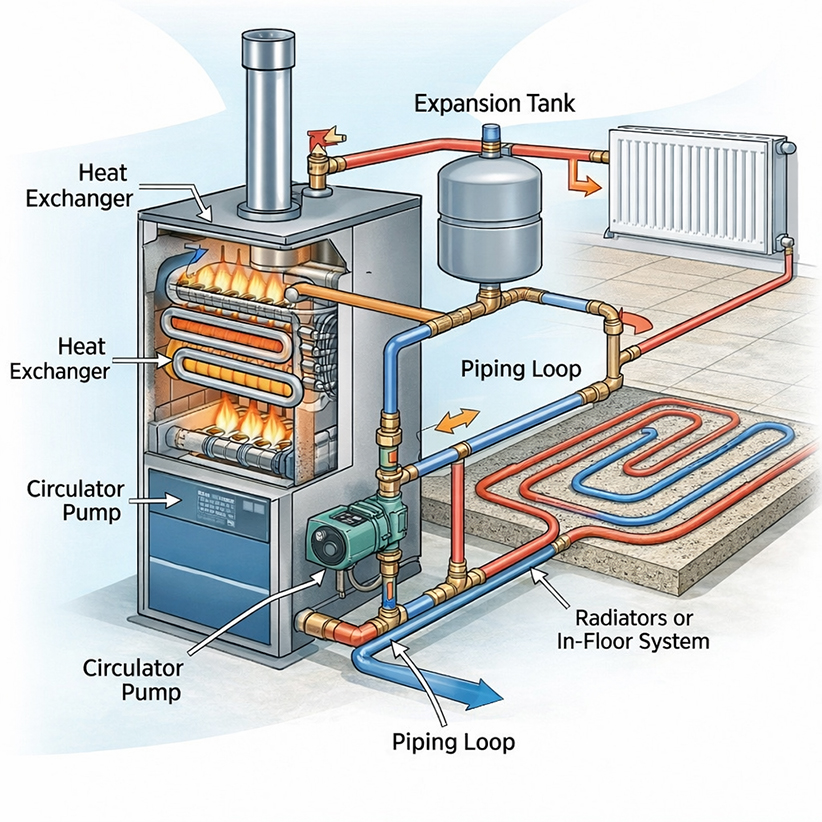
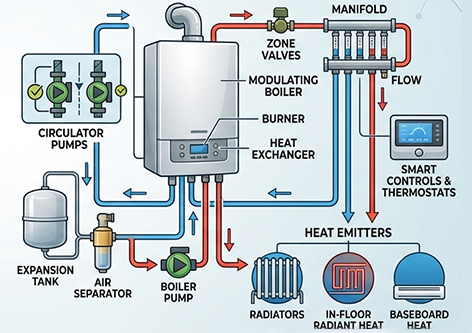
A boiler heats water and circulates it through a closed-loop system to provide consistent, radiant heat throughout your home. Unlike forced-air systems, boilers use hot water or steam distribution through radiators, baseboards, or in-floor heating systems.
Here’s how a typical boiler system works:
This process creates even, quiet heating without blowing air or creating cold spots.

Most modern boiler systems include:
Boilers are built to last, but aging systems lose efficiency and reliability over time.
You should consider replacement if:
Modern high-efficiency boilers can significantly reduce energy costs while improving overall comfort.
Replacing a boiler can be a significant investment, but homeowners have flexible options.
For many homeowners, renting provides convenience, protection, and peace of mind without unexpected repair costs.
Knowing how your boiler system works helps you:
A properly installed, high-efficiency boiler delivers consistent comfort, lower energy bills, and reliable heating performance throughout Ontario winters.
In many cases, repairing your boiler is the right short-term solution.
Repair may be the best option if:
A professional diagnostic can determine whether a repair will restore reliable performance and extend system life.

Licensed & Insured Technicians

TSSA & ESA Certified Installers
In some situations, replacing your boiler is the more cost-effective long-term decision.
You should consider replacement if:
Upgrading to a modern high-efficiency boiler can reduce energy costs, improve comfort, and deliver long-term reliability.
Watch for these common indicators:
These signs often point to declining system performance and potential failure.
Homeowners in Ontario may qualify for programs that help reduce upgrade costs, including:
These incentives can significantly lower the cost of upgrading to a high-efficiency boiler system.
A Boiler Should Be Chosen for the Home, Not Just the Price Tag. Choosing a boiler is not as simple as picking a size or brand. The right system must match your home’s heating demand, hot water needs, and overall layout. A properly selected boiler will provide steady comfort, lower operating costs, and better long-term reliability throughout Ontario winters.
A boiler installed in Ontario needs to handle long heating seasons, deep cold, and heavy winter demand. That means your system must be chosen for real performance under load, not just brochure specs.
Your boiler should be able to support:
Boiler performance depends heavily on how heat is delivered throughout the home. Homes with radiators, baseboards, in-floor heating, or multiple heating zones all place different demands on the system.
Key factors include:
A home with poor insulation or multiple zones may require a very different boiler setup than a smaller, tightly sealed home.
An undersized boiler may struggle to heat the home or keep up with hot water demand. An oversized boiler can short cycle, waste energy, and wear out faster.
Proper sizing should be based on:
Choosing the correct output is one of the most important parts of buying a boiler system.
A high-efficiency boiler can reduce fuel consumption and monthly heating costs, but only if the system is installed and sized properly. Real efficiency depends on both the equipment and the quality of the installation.
Modern high-efficiency boilers can help improve:
AFUE (Annual Fuel Utilization Efficiency) measures how efficiently a boiler converts fuel into usable heat.
Higher AFUE ratings generally mean less wasted energy and better long-term savings, especially in colder Ontario climates where boilers run frequently.
The type of fuel used impacts both efficiency and long-term operating costs.
Choosing the right fuel type is critical for balancing performance, availability, and long-term cost efficiency.
| Fuel Type | Typical AFUE Range |
|---|---|
| Natural Gas | 90-98% |
| Electric | 95-100% |
| Propane | 90-98% |
Fuel availability, energy pricing, and system design all influence which option makes the most sense for your home.
ENERGY STAR® rated boilers meet strict energy efficiency standards and can provide long-term energy savings when properly installed and sized.
Benefits may include:
For many homeowners, an ENERGY STAR® certified boiler is a smart long-term investment that improves both performance and cost efficiency.
Choosing the right boiler system directly impacts home comfort, hot water performance, and long-term operating costs. Understanding the differences between combi boilers, system boilers, and conventional boilers will help you choose the best heating solution for your home in Ontario.

A combi boiler (combination boiler) provides home heating and hot water on demand from one compact unit. It eliminates the need for a storage tank and is ideal for homeowners looking to save space and improve energy efficiency.
Best For: Smaller to mid-sized homes with moderate hot water demand
Key Benefits:
Considerations:

A system boiler uses a separate hot water tank to deliver consistent, reliable heating and strong water pressure continuously. It is designed for homes with higher hot water demand and performs well when multiple taps are used at the same time.
Best For: Mid to large homes with multiple bathrooms and higher usage
Key Benefits:
Considerations:

A conventional boiler (heat-only boiler) uses both a hot water tank and a cold water storage tank. It is commonly installed in older homes with radiator systems and supports homes with high and steady heating demand.
Best For: Larger homes or properties with older radiator infrastructure
Key Benefits:
Considerations:
For most Ontario homeowners, the best boiler system depends on your home’s size, hot water demand, and existing heating setup — not just efficiency ratings.
Energy
Efficiency

Hot Water
Performance

Consistent
Comfort

Ultra-Quiet
Operation
Long-Term
Reliability
The right boiler system depends on your home’s layout, heating zones, and hot water usage — but choosing the correct boiler type and ensuring proper installation will have the biggest impact on long-term comfort and operating costs.
Understanding the differences between boiler systems helps you choose the right balance of energy efficiency, hot water performance, and long-term value for your home.
| Feature | Combi Boiler | System Boiler | Heat-only Boiler |
|---|---|---|---|
| Heating + Hot Water | Combined in one unit | Separate tank required | Separate tank required |
| Hot Water Output | Moderate (on-demand) | High (stored hot water) | Very high (tank-based) |
| Space Required | Minimal | Moderate | High |
| Installation Complexity | Lower | Moderate | Higher |
| Efficiency | High (90–98% AFUE) | High (90–98% AFUE) | High (80–90% AFUE) |
| Best For | Smaller homes | Medium to large homes | Older homes with radiators |
| Upfront Cost | Medium | High | Medium |
| Long-Term Cost | Medium | Low | Low |
| Comfort Level | Good | Very Good | Very Good |
| Maintenance Risk | Medium | Medium | Low |
| Performance Stability | Good | Very good | Excellent |
| Long-Term Flexibility | Moderate | High | Best |
Energy Efficiency

Hot Water Capacity

Installation Cost

System Performance

Long-Term Value
For many Ontario homeowners, a properly sized system boiler offers the best balance of heating performance and hot water capacity, while combi boilers are ideal for smaller homes. The right choice depends on your home’s layout and daily hot water demand.
Boiler efficiency depends on more than just the AFUE rating. System design, installation quality, water temperatures, and how your home uses heat all play a major role in real-world performance and operating costs.
AFUE (Annual Fuel Utilization Efficiency) measures how efficiently a boiler system converts fuel into usable heat.
Higher AFUE ratings mean less wasted energy, but true efficiency truly depends on proper installation, system design, and overall setup.
Condensing boilers achieve higher efficiency by capturing additional heat from exhaust gases, especially when operating at lower water temperatures, improving overall energy performance and reducing heating costs.
Even the highest-efficiency boiler system will not perform properly if the system design or installation quality is poor.
Real performance depends on:
A properly designed system ensures maximum efficiency, consistent home comfort, and long-term reliability and performance for your home.
Combi boilers are efficient as they provide hot water on demand and eliminate standby heat loss from storage tanks.
System boilers provide strong efficiency while supporting higher hot water demand.
Conventional boilers are less efficient due to heat loss from storage tanks, but still perform well in larger or older homes.
The wrong boiler size can cost you comfort, efficiency, and long-term reliability.
Boiler sizing is not about choosing a “bigger” system for more power. The right boiler system must match your home’s heat loss, heating layout, and hot water demand. When sizing is incorrect, homeowners often experience higher energy bills, uneven heating, and premature system wear.
A boiler that is too large for your home will cycle on and off frequently, reducing efficiency and creating unnecessary wear on the system.
Oversized systems may seem safer, but they often lead to performance issues and higher long-term costs.
A boiler that is too small may struggle to keep up with heating demand, especially during colder weather or when multiple zones are active.
Undersized systems often result in poor performance and difficulty maintaining consistent heat.
Proper boiler sizing should be based on actual heating demand, not rough square footage or guesswork as it can cause issues in the future.
Correct sizing ensures efficient performance, consistent comfort, and reliable operation.
Many Ontario homes fall into general boiler output ranges such as:
These numbers are only starting points. The final boiler size should always be based on your specific home, not a generic estimate.
The best boiler sizing decision comes from understanding how much heat your home actually loses during Ontario winter conditions. A professional heat loss calculation evaluates the full picture.
It takes into account:
This is what ensures your boiler system delivers consistent comfort, better efficiency, and the right long-term performance.
Not all boiler systems operate the same way. The system you choose will directly affect your home’s heating performance, hot water delivery, and overall energy efficiency. Before comparing brands or prices, it’s important to understand the different types of boiler systems and how they function.
Boilers are designed around how heat is generated, stored, and distributed throughout your home. The key difference between systems comes down to how hot water is produced and delivered. Some systems prioritize compact design and efficiency, while others are built to handle higher demand and larger homes with multiple zones.
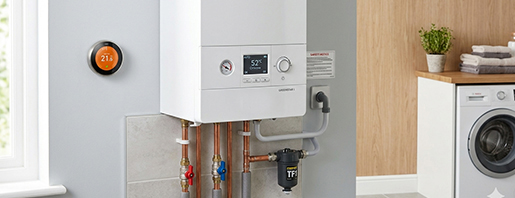
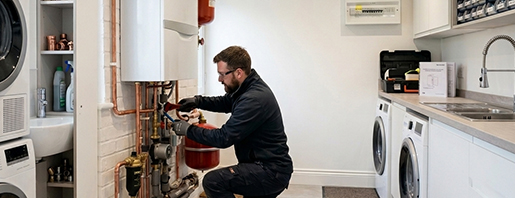
Both boilers and heat pumps can heat your home effectively, but they operate very differently. The right choice depends on your home’s layout, your comfort expectations, and how you plan to heat your home during Ontario winters.
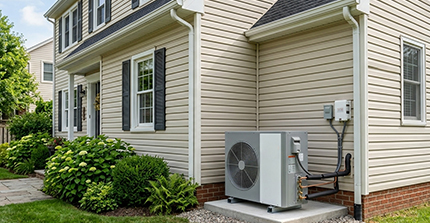
Heat pumps transfer heat rather than generate it, making them highly efficient in moderate conditions.
Considerations:

Boilers generate heat using gas or propane and distribute it through water-based systems for consistent comfort.
Considerations:
In Ontario, many homeowners choose boiler systems for reliable winter heating, while heat pumps can be a strong option when paired with a backup system. The best solution depends on your home and your long-term comfort and energy goals.
Choosing the right boiler system is only part of the decision — proper system design, professional installation, and long-term support are what truly determine comfort, efficiency, and reliability.
Upgrading your boiler system doesn’t have to mean a large upfront cost. Flexible payment plans and rental options make it easier to get the right system without financial strain.

With Direct Home Comfort, you get clear and transparent boiler pricing so you always understand your options before making a decision.

Your comfort matters. We stand behind every boiler installation to ensure your system performs properly and meets expectations.

Protect your investment with boiler protection plans that reduce unexpected repair costs and keep your system running efficiently.

We understand the demands of Ontario winters and build systems designed to perform reliably in real cold-weather conditions.


















Upgrading your boiler system doesn’t have to require a large upfront investment. Ontario homeowners have flexible options including financing, monthly payment plans, and boiler rental programs that include service and protection coverage.
Spread out the cost of your boiler system with flexible financing options designed to make upgrades more manageable and predictable.
Financing gives you a simple way to invest in long-term comfort without large initial expenses.
Boiler rental programs offer a convenient way to upgrade your heating system without large upfront costs or unexpected expenses.
Rental is a stress-free option for reliable heating with predictable monthly costs and built-in support.
Boiler protection plans help cover repair costs and keep your system running efficiently with ongoing service and support.
These plans provide added security and peace of mind for homeowners looking to protect their investment.

Your budget and upfront cost preference

You prefer ownership or monthly simplicity

Comfort with ongoing maintenance

Long-term cost predictability
Each option offers different benefits depending on your financial goals and how you want to manage your home heating system. Many Ontario homeowners choose boiler rental for simplicity and protection, while others prefer financing options for full ownership.
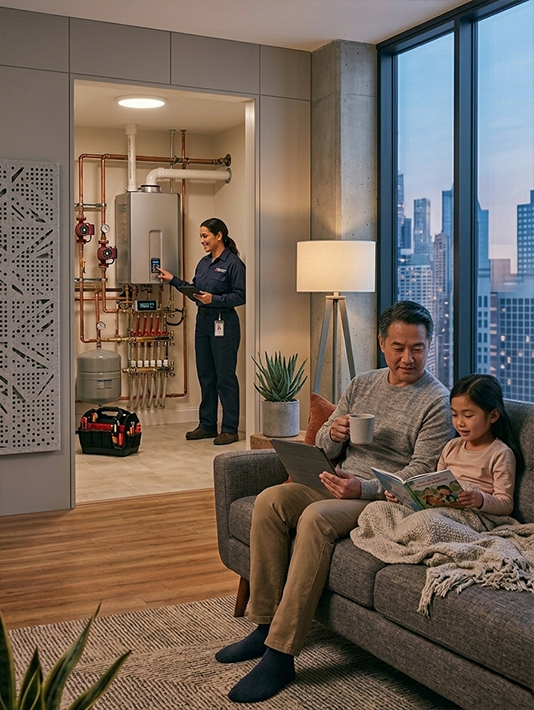
Proper boiler performance starts with the right system design. From boiler sizing and piping layout to full system configuration, every installation is built for long-term efficiency, reliability, and performance in Ontario winters.
Proper boiler performance starts with the right system design. From boiler sizing and piping layout to full system configuration, every installation is built for long-term efficiency, reliability, and performance in Ontario winters.
Our team specializes in boiler systems and hydronic heating, ensuring precise installation, proper setup, and dependable system performance.
We install all major boiler system types, including combi boilers, system boilers, and conventional boilers, ensuring the right solution for your home’s layout and heating demand.
Every installation done by our professionals, is done right the first time and meets Ontario safety standards, delivering reliable heating, safe operation and long-term comfort and peace of mind.
Our licensed HVAC technicians arrive on time, review your home’s heating system, and confirm the boiler installation plan before work begins.
Your old boiler system is safely disconnected and removed in accordance with Ontario safety standards.
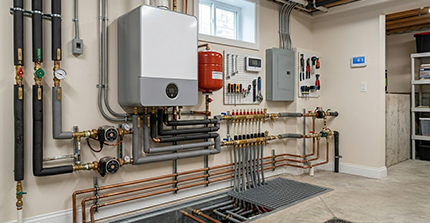
Your new boiler system is installed and connected properly. This includes:
We configure your system for optimal performance, including temperature settings, flow rates, and efficiency adjustments.
Before completion, we test the entire system to ensure:
We walk you through your new boiler system, explain how it works, and answer any questions so you’re fully confident and comfortable.
Most boiler installations are completed within one day, depending on system complexity. Larger or more complex installations involving piping upgrades or multi-zone systems may take longer.
Proper boiler installation is essential for ensuring long-term performance, energy efficiency, and the overall lifespan of your heating system. A professionally installed boiler delivers consistent and reliable heating, helps maximize energy efficiency, and reduces the risk of costly breakdowns and repairs. Choosing an experienced boiler installation company is just as important as selecting the right boiler, as proper installation also helps extend the system’s lifespan and ensures compliance with manufacturer warranty requirements.
A properly installed boiler system is critical for energy efficiency, home comfort, and long-term reliability. Our installation process ensures your system operates safely and performs at its best in Ontario conditions.
We begin by safely shutting down and removing your existing heating system.
Your boiler system is set up and secured based on your home’s layout and design.
All system connections are completed to ensure safe and efficient operation.
We configure the system to match your home’s heating requirements and needs.
Before completion, we fully test the system to confirm performance and safety.
We complete a final inspection and guide you through your new boiler system.
Choosing the right boiler installation company is just as important as choosing the right boiler system. Even the best system will underperform if it’s not installed and configured properly.
When comparing boiler installation companies, look for:
A properly installed boiler system will deliver better efficiency, longer lifespan, and more reliable comfort.
The best boiler system depends on your home’s size, layout, and hot water demand. There is no one-size-fits-all solution.
Most Ontario homes benefit from high-efficiency boiler systems designed for cold climates and long heating seasons.
Common benefits include:
When choosing a system, consider:
The right choice comes from proper system design, not just selecting a model.
5 Boiler Buying Mistakes Ontario Homeowners Must Avoid
Avoid these common mistakes when upgrading your boiler system:
These mistakes can lead to higher energy bills, poor heating performance, and costly repairs.
A properly designed and professionally installed boiler system delivers consistent comfort, lower operating costs, and long-term peace of mind.
Choosing the right boiler installation company is one of the most important decisions you’ll make. Proper boiler sizing, system design, and installation quality will directly impact your comfort, efficiency, and long-term system performance
The biggest factor in boiler performance is correct sizing and system design. A qualified HVAC company should always perform a full heat loss calculation before recommending a system.
This calculation considers:
Incorrect sizing can lead to:
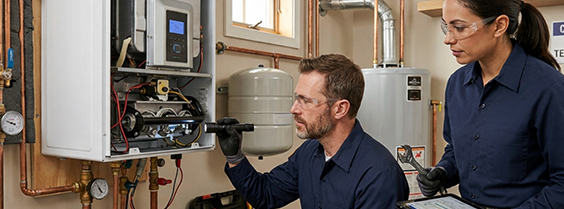
Look for systems installed by experienced professionals trained in hydronic heating systems and modern boiler technology.
Make sure your installer is:

You should understand exactly what is included before installation begins.
Look for:
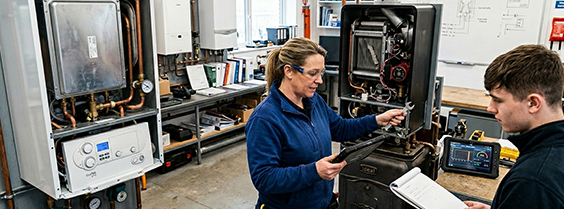
Not all homes require the same type of boiler system. A qualified installer should be experienced with:
Proper experience ensures your system is matched correctly to your home.

A reliable company should support your system beyond installation. Always remember to ask about:
Strong after-install support ensures your system continues to perform properly for years.
Compare boiler options, understand boiler pricing in Ontario, and choose between boiler rental or purchase with expert guidance.
Choosing a boiler is easier when you understand the real decisions behind it — sizing, system type, installation quality, operating cost, and long-term reliability. Explore these boiler-specific resources to help you make a smarter decision.

Boiler sizing is one of the most important parts of the buying process. Learn how heat loss, home layout, and hot water demand affect the size and output your system actually needs.

Not every home should have the same type of boiler. Compare combi and system boilers based on hot water demand, home size, available space, and long-term performance.

Some homeowners want ownership, while others prefer predictable monthly costs and service coverage. Understand the pros, trade-offs, and long-term value of both boiler rental and buying.
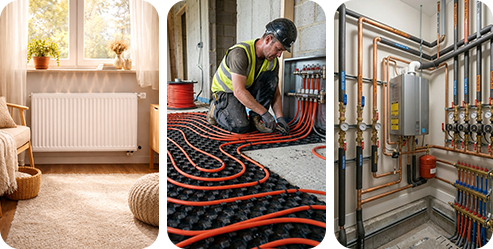
A boiler system is built for long-term reliability, but like any heating system, issues can develop over time. Knowing what to look for can help you identify problems early and avoid unexpected breakdowns during Ontario winters.
Some basic checks can be done by homeowners, but any work involving gas, pressure, or internal components should always be handled by a licensed HVAC technician.
Before booking a repair, there are a few simple things you can check:
Unusual sounds or smells can indicate internal issues that should not be ignored.
Common warning signs:
These issues can worsen over time and should be inspected by a technician.
If your home feels colder than usual, the issue may be related to system performance rather than a full breakdown.
Possible causes:
A proper diagnostic is needed to identify the root cause.
If your home feels colder than usual, the issue may be related to system performance rather than a full breakdown.
Possible causes:
This is often a sign the system needs adjustment or professional servicing.
Regular maintenance helps keep your boiler system running efficiently and reduces the risk of breakdowns.
Professional maintenance typically includes:
Annual maintenance is recommended before the heating season begins.
You should book a professional boiler inspection if:
Routine inspections help catch small issues before they turn into major repairs.

The cost of a boiler isn’t just the installation — it’s the total cost of owning and operating the system over time.
When evaluating a boiler, homeowners should look at:
A lower upfront price does not always mean
lower long-term cost. The right system
balances performance, reliability, and
predictable expenses over time.
The goal is to choose a boiler solution
that delivers consistent comfort while
minimizing long-term cost and risk.

Choosing the right boiler is about more than just equipment — it’s about how the system performs in your home over time.
A well-matched system should:
What Impacts Long-Term Boiler Value

Looking for reliable Ontario HVAC service, furnace repair, or air conditioner installation? Our licensed team is ready to handle all your heating, cooling, and HVAC needs. Contact Direct Home Comfort today for a free quote!
Get exclusive tips, expert advice, and the latest updates on heating, cooling, plumbing, and more — delivered straight to your inbox.



If you are not completely satisfied with your Direct Home Comfort product for any reason within 30 days of purchase, we will remove the product and refund the purchase price.